News
Cloud Sovereignty Should Include Architecture | Aleph Cloud
Europe's CADA debate is right to focus on cloud dependency. Sovereignty assessments should ask who can stop a workload, who can inspect it, and how those answers can be verified.
Clément
4 min. read -

**Aleph Cloud **is excited to announce its integration with Eclipse, the modular Ethereum Layer 2 built on the Solana Virtual Machine (SVM). This integration empowers developers building on Eclipse with direct access to Aleph Cloud’s decentralized messaging protocol, persistent storage, and secure offchain compute, creating a new standard for scalable, trustless Web3 applications.
Eclipse is a high-performance Layer 2 that combines Solana’s fast and parallelized execution with Ethereum’s security and liquidity.
It uses:
**• SVM for execution, **enabling massive throughput and low-latency dApps.
**• Ethereum for settlement, **preserving composability with the broader ecosystem.
**• Celestia for data availability, **ensuring verifiable, scalable storage of transaction data.
**• RISC Zero for zero-knowledge proofs, **enhancing trust in off-chain computation.
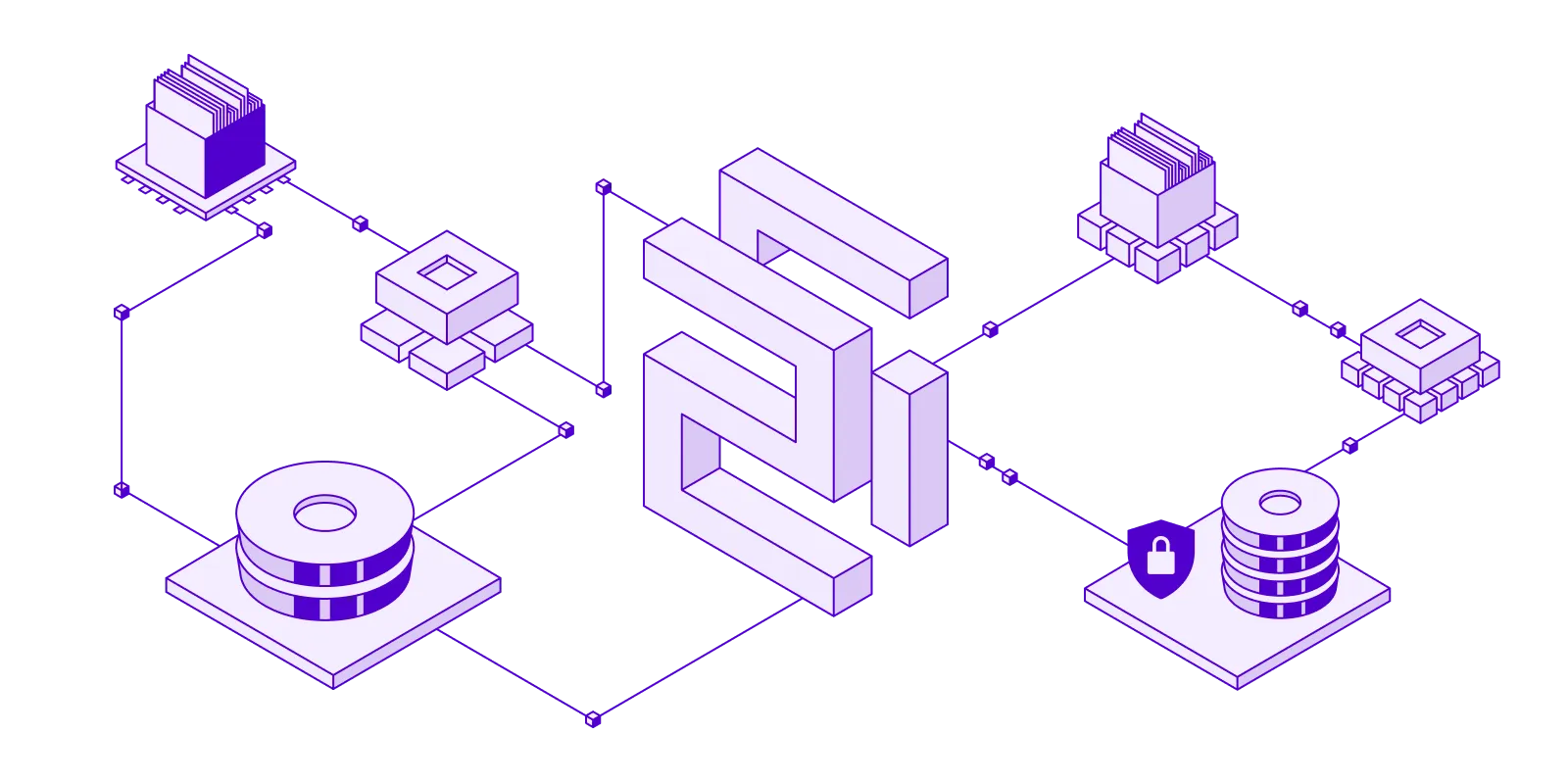
Now, with Aleph Cloud integration, developers gain access to a powerful, decentralized cloud layer that complements Eclipse’s modular blockchain stack.
Aleph Cloud’s integration brings the same capabilities available to Sonic, now tailored for the SVM ecosystem. Here’s what developers and users can unlock:
Modular architecture
Decentralized storage
Secure compute layer
Crosschain interoperability
Ready to Build Securely?
Implement Confidential Virtual Machines today and lead the way in privacy-first computing.
Together, Aleph Cloud and Eclipse unlock the building blocks for truly decentralized, scalable dApps:
By combining these technologies, developers can move beyond the limits of monolithic chains and centralized services, and toward a **Web3 Supercloud **that scales with user demand.
Eclipse builders can now integrate Aleph Cloud with full access to SDKs and developer documentation:
News
Europe's CADA debate is right to focus on cloud dependency. Sovereignty assessments should ask who can stop a workload, who can inspect it, and how those answers can be verified.
Payments
Deploy a decentralized VM in 10 minutes with Aleph Cloud's Rust CLI. Install, fund with USDC/ALEPH, launch Ubuntu instances for ~$10/month, and SSH in. No Python, no centralized cloud.
Computing
Aleph tokenomics introduces a dual-stream rewards model for decentralized cloud operators: a transitional reward floor plus a usage-based revenue share.
Payments
Pay As You Go and Holder Tier payments are officially deprecated. Aleph Cloud now runs on a single credit system. Top up with USDC, fiat, or ALEPH and pay for what you use.